
Last week, Internet Works joined the Congressional AI Caucus in hosting a briefing focused on the role of Middle Tech companies in AI policy and deployment, how the rapidly evolving technology is being incorporated into their products, and what lawmakers should consider when shaping the future of AI policy.
The goal was simple: to provide Members of Congress and their staff with a clearer picture of how AI is actually being used across the digital ecosystem. “There is so much more to the story of AI policy than the largest model developers – Middle Tech companies are the ones putting AI into the hands of millions of people and small businesses,” said Peter Chandler, the Executive Director of Internet Works.
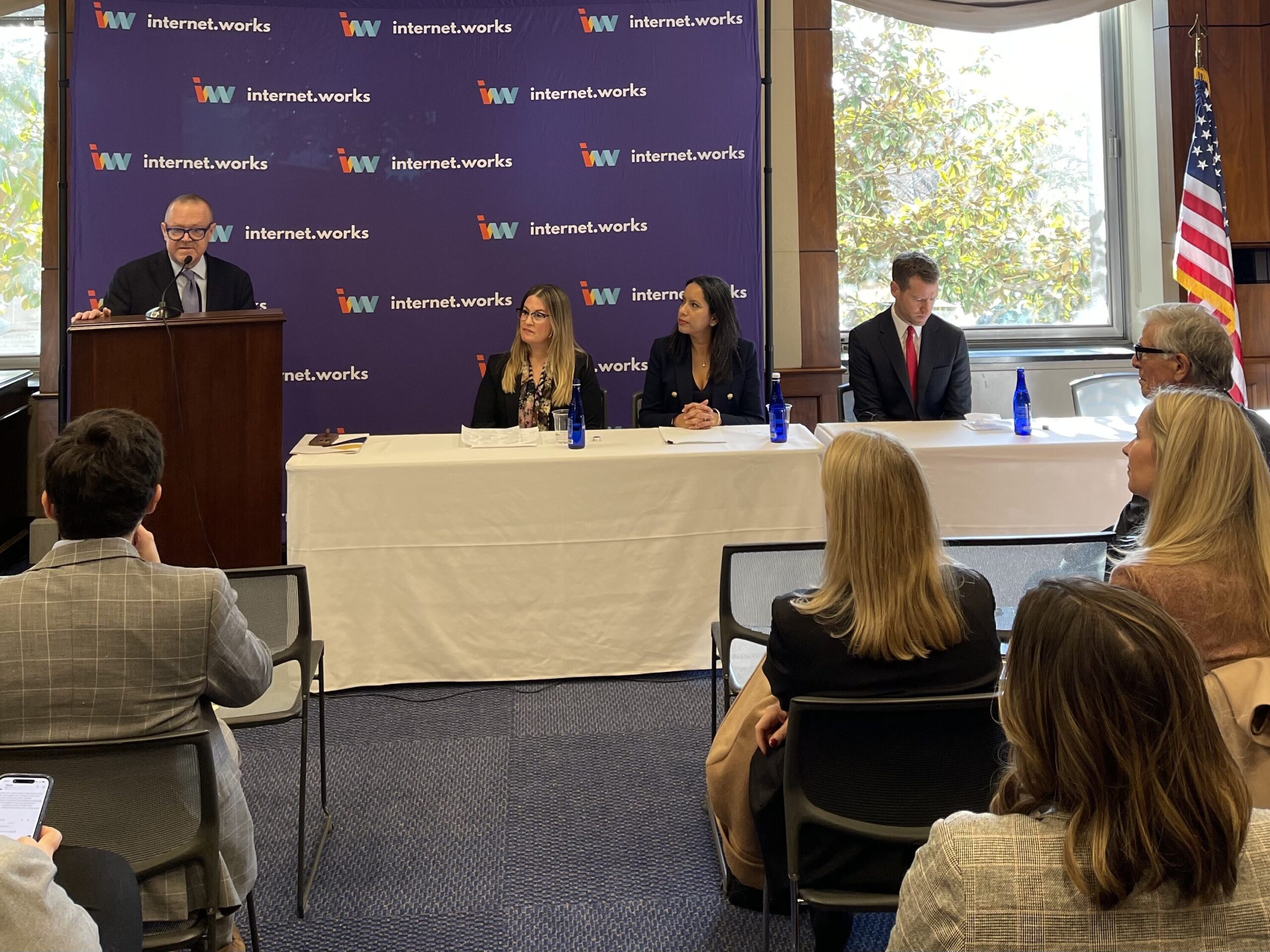
The briefing brought together Members of Congress, congressional staff, and leaders from Internet Works member companies. We were honored to have two co-chairs of the Congressional AI Caucus, Congressman Don Beyer (D-VA-08) and Congresswoman Doris Matsui (D-CA-07), join us and provide remarks that reinforced a growing recognition on Capitol Hill that effective AI policy depends on listening to the full spectrum of voices in the tech ecosystem.
“The AI debate is too often dominated, as Congressman Beyer said, by frontier Gen AI labs and the largest platforms. That leaves small and mid-sized companies wondering if they’ll be swept up in rules that aren’t necessarily designed for them. With that in mind, empowering responsible innovation has the potential to transform society for the better,” said Congresswoman Matsui.
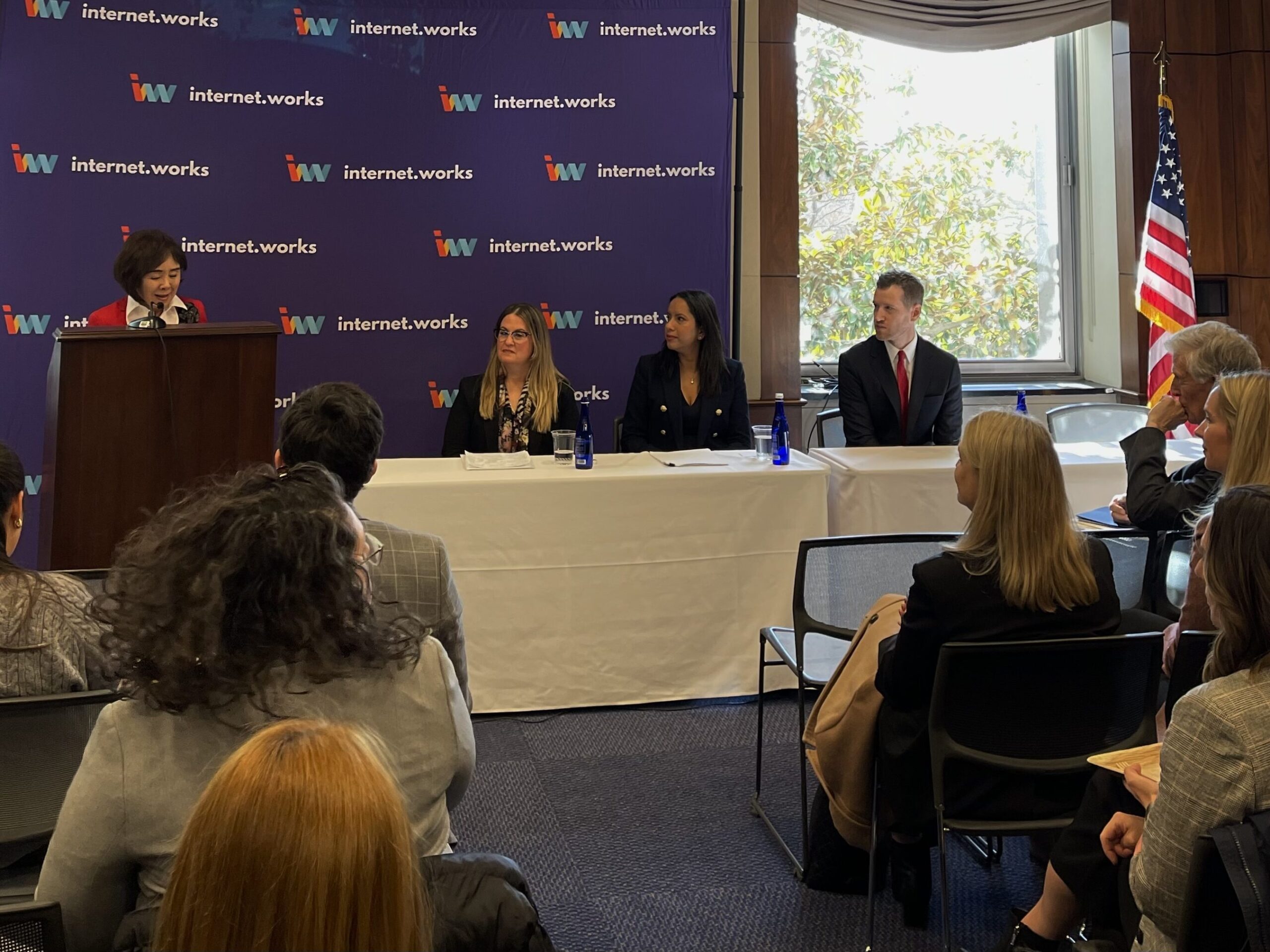
The conversation moved beyond headlines and into real-world implementation, featuring leaders from eBay, Intuit, and Mozilla offering concrete examples of how AI is being integrated responsibly to improve products, protect users, and support small businesses.
Brian Grinstead, Senior Principal Engineer at Mozilla, explained that Mozilla’s nonprofit mission to improve the health of the internet directly shapes how the company approaches AI and integrates it into its products.

Avritti Khandurie Mittal from eBay shared how AI is already supporting small businesses on their platform to improve marketplace trust and reduce friction for buyers and sellers. Similarly, Liza Levitt from Intuit highlighted that AI can level the playing field for small businesses and help them compete and grow by giving small businesses the tools they otherwise would not have access to.
Rather than debating AI in the abstract, the panel focused on what’s actually happening inside companies today, highlighting how AI is being deployed incrementally and responsibly and the importance of privacy, data protection, and transparency. Several clear lessons emerged from the briefing:
- Middle Tech is essential to the AI conversation. Companies of all sizes are deeply impacted by AI policy and are actively innovating in responsible ways.
- Policy and collaboration go hand-in-hand. Uniform federal standards can harmonize state laws and build trust and consistency, but clearly require frameworks to allow companies to plan, invest, and innovate.
- Technical realities must inform regulation. Constructive dialogues between policymakers, product leaders, and industry stakeholders leads to better outcomes.
This briefing was an opportunity to reinforce that the tech industry is not a monolith and to provide lawmakers with critical information needed to craft smart, balanced policy. As discussions about AI continue to evolve rapidly at both the state and federal levels, Internet Works remains focused on ensuring that Middle Tech companies, and the millions of users and small businesses that rely on them, are at the forefront of the conversation.